

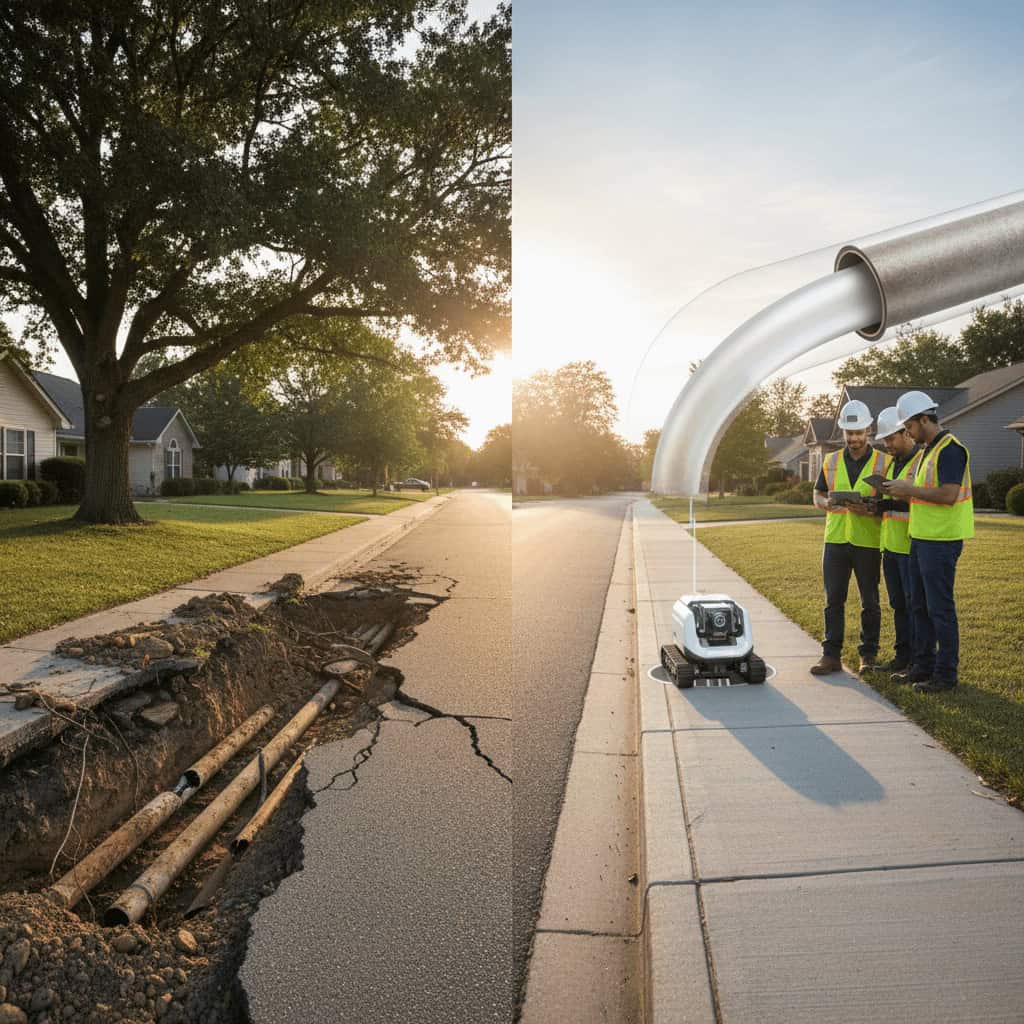
Deciding whether to repair a damaged drain or sewer is a common challenge for property managers and homeowners. No dig relining offers a way to fix pipes without excavating yards or tearing open walls. That method can save time and reduce disruption, but it is not the right choice in every case. Knowing when to choose relining requires looking at pipe condition, access needs, and budget constraints.
This article explains clear indicators that point to relining as a good option. You will find practical examples, cost ranges, maintenance tips, and questions to ask a contractor. The goal is to give you realistic guidance so you can make decisions that preserve building value while minimizing tenant disturbance.
When No Dig Relining Makes Sense
No dig relining makes sense when structural defects are localized, when access is limited, and when you need to minimize tenant disruption. Typical triggers include cracks, offset joints, and root intrusions that do not involve collapsed sections. If a camera inspection shows continuous but damaged pipe walls rather than a broken pipeline, relining is often a cost effective route.
Use this approach when the pipe alignment is mostly intact and the diameter reduction caused by the liner will not interfere with flow. For example, a 4 inch clay drain with hairline cracks and root entry points across several runs in an apartment building is often a prime candidate. Relining can restore function for 25 to 50 years depending on the resin used and the local soil chemistry.
For a deeper look at maintenance planning and specific replacement thresholds consult a practical resource on property repairs such as when to consider no-dig pipe relining services. That guide pairs routine maintenance ideas with intervention timelines that reduce costly emergency repairs.
How No Dig Relining Works and What to Expect
Relining uses an inversion or pull in place method to position a resin saturated sleeve inside the damaged pipe. The sleeve is expanded and cured so it bonds to the host pipe. Most systems rely on epoxy or polyurethane resins that harden into a new smooth inner surface. The process avoids open trenches and can often be completed in hours to a few days, depending on length and access points.
Inspection and preparation
Before any relining, a closed circuit television inspection is performed to map defects and confirm that the pipe is not collapsed. Debris removal or root cutting may be necessary to create clear channels for the sleeve. Accurate reporting here prevents surprises during installation.
Curing and testing
Curing can occur with hot water, steam, or UV light depending on the product. After cure, contractors run another camera pass to confirm proper adhesion and check for obstructions. A pressure test or flow test helps confirm restored performance.
Benefits for Apartment Maintenance Teams
Relining reduces tenant disturbance and shortens downtime. Instead of replacing a section of floor or excavating around building foundations you can often complete the job with only a few access points. That means fewer tenant complaints and lower relocation costs during work.
- Time savings Typical jobs that cover 50 to 200 feet can take a single day to a few days while full replacement can take several weeks.
- Lower restoration costs No need to replace landscaping, walkways, or flooring after the pipe work is done.
- Long service life Modern resin liners commonly carry life expectancies of 25 to 50 years in favorable conditions.
For building portfolios where avoiding tenant downtime directly affects revenue, these advantages add up quickly. A small trip to a repair shop is one thing, but relocating tenants for major excavation is costly and often avoidable with the right intervention.
When Traditional Repair or Replacement Is Better
No dig relining is not a universal fix. If pipes have collapsed, shifted severely, or are misaligned, lining will not restore original geometry and may restrict flow. Similarly, if there are very large root intrusions that compromise structural integrity, full replacement may be required.
Other red flags include multiple service laterals with active breaks, or situations where pipe diameter reduction from lining would cause frequent blockages. In older buildings with very small pipe sizes or unusual materials, a traditional approach may still be the safer choice.
Typical Costs and Financial Considerations
Costs vary with length, diameter, access difficulty, and resin type. As a rough guide, relining can run from roughly 50 to 75 percent of full excavation and replacement cost for comparable lengths. Unit prices in many markets fall in the range of $100 to $400 per linear foot, depending on those variables.
Factor in soft costs when comparing options. Relining can reduce restoration expenses, tenant relocation fees, and lost rent. An accurate cost calculation should include the initial outlay, any warranty coverage, and estimated remaining life compared to full replacement.
How to Prepare Your Property for Relining
Preparing the site reduces surprises and keeps projects on schedule. This applies whether you manage a single home or a large apartment complex.
Tenant communication
Give tenants clear timelines and instructions. Explain any temporary shut off periods for water and what smells or sounds to expect during curing. Providing a contact person for questions reduces confusion and helps the crew access necessary points quickly.
Access and inspection planning
Map entry points and clear work areas. Ensure basements, utility rooms, and roof access are available. If a unit must be vacated for a short time, offer alternatives and document agreements in writing. Early coordination with a contractor about access saves time and money.
Choosing a Contractor and What to Ask
Select a contractor who is experienced with the specific relining technology you plan to use. Not all products react the same way to local soil conditions or wastewater chemistry. Talk to property managers who have used the company and request camera footage from past jobs.
Questions about materials and certification
- What resin and liner brand will you use
- Is the product rated for the pipe diameter and soil conditions on site
- Can you provide material safety data and cure profiles
Warranty and post install follow up
Ask about warranty terms and what is covered for leaks, adhesion failure, or premature deterioration. Clarify who handles any necessary follow up camera inspections and what response time you can expect if a problem appears within the warranty period.
Common Myths and Practical Realities
There are several myths about relining that can mislead decision makers. One is that relining never restricts flow. In reality a liner does reduce internal diameter slightly which is why proper sizing and flow calculations are important. Another myth is that lining fixes every problem. It cannot correct gross misalignment or fully collapsed pipe sections.
On the positive side, relining does often stop root intrusion if the liner is properly sealed, and it reduces surface roughness which can improve flow rates despite the small loss in diameter. Real world performance depends on installation quality and material selection, so choose contractors who will perform a clear camera inspection before and after work.
Finally, consider maintenance planning alongside any relining work. Regular camera inspections at 3 to 5 year intervals help detect new issues before they become emergencies and protect your investment in the liner.
Relining can be a highly practical repair approach when used in the right circumstances. Use thorough inspection, realistic cost comparison, and careful contractor selection to decide whether it fits your property needs. If you manage apartments or multi unit buildings, a thoughtful relining strategy can reduce disruptions and extend pipe life with lower total repair cost when compared with full replacement.
Ready to move forward with a plan for pipe repair on your property? Start by scheduling a camera inspection and gather multiple written proposals that detail materials, cure methods, warranties, and follow up procedures. When you need additional maintenance tips for preventing larger problems in buildings explore practical maintenance resources and consult experienced plumbing teams to create a repair schedule that fits your budget and occupancy needs.